
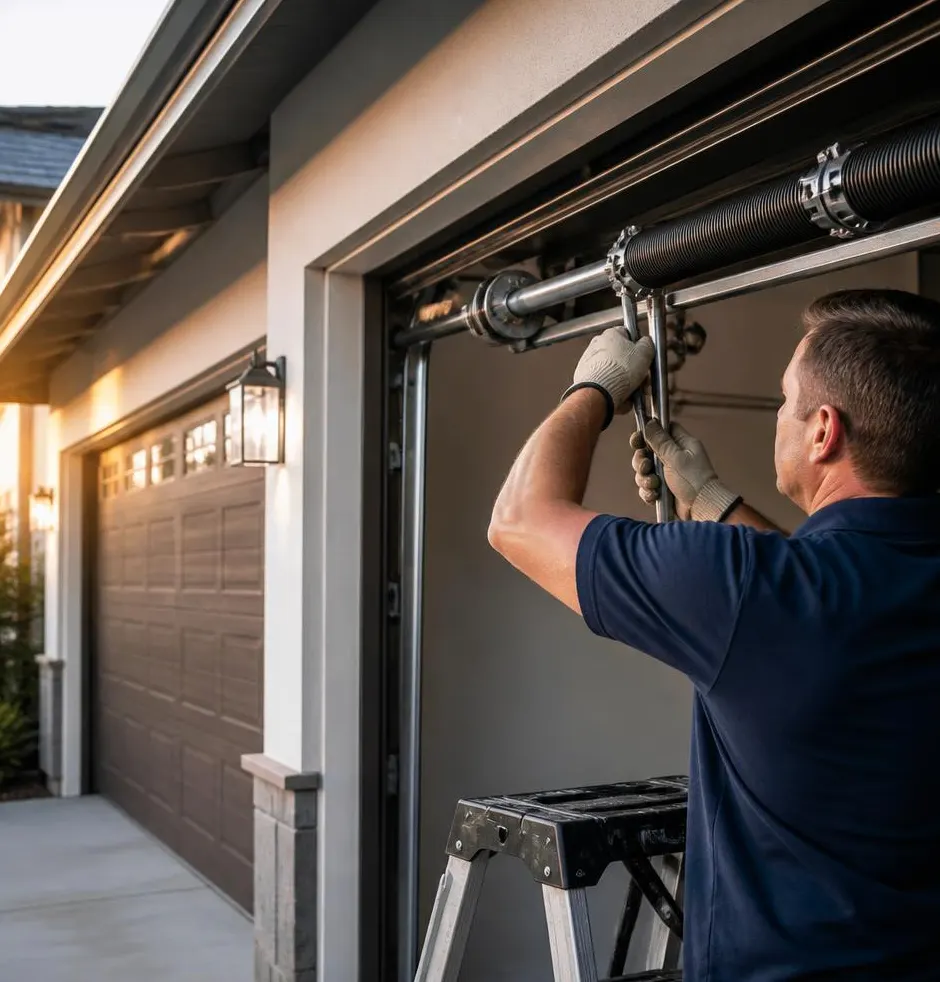
The Cost of Waiting Another Season
Skip garage door storm prep this year and the bill doesn't show up until the worst possible moment: mid-storm, when a door buckles inward, wind gets into the garage, and pressure starts pushing up on the roof deck from underneath. That's not a hypothetical. It's the most common way wind damage spreads from "we lost a door" to "we lost part of the roof." Add in the water that pours through a blown-out seal during an afternoon downpour, and you're looking at soaked drywall, ruined storage, and a repair bill that dwarfs what a pre-season inspection would have cost. Suwannee County sits squarely in the path of late-season tropical systems, and October storms are still very much in play here. This is the window to deal with it, not after the next watch gets issued.
Why the Garage Door Is a Home's Weakest Wall
Every other wall in a house is a solid, continuous surface. The garage door is a large moving panel held in place by springs, tracks, rollers, and a handful of hinges — and it covers the biggest single opening in most homes. When wind hits a house, pressure builds. If that pressure finds a weak point and pushes the garage door in, air rushes into the garage and pushes outward on the roof and walls from the inside. Engineers call this internal pressurization, and it's a major reason older, non-reinforced garage doors are singled out in wind-load standards for newer construction. If your door predates those standards, or it's never been evaluated against them, it's likely the single weakest structural point on the house.
Signs Your Door Isn't Ready
- Panel swelling or warping — humidity swings common to this area cause wood and composite doors to swell, which can keep the door from seating tightly in its track.
- Rust at hinges, tracks, or the bottom bracket — moisture exposure accelerates corrosion, and a rusted bracket is a weak anchor point exactly where wind load concentrates.
- Worn or missing weatherstripping — gaps let wind-driven rain in during downpours and reduce the door's resistance to pressure changes.
- A bent or struggling opener rail — if the door binds or shudders when it moves, the opener is compensating for a structural issue, not just getting old.
- No bracing and no wind rating on record — if you don't know whether your door was ever rated for wind load, assume it wasn't.
A Pre-Storm Checklist Worth Doing Now
- Test the balance. Disconnect the opener and lift the door by hand. It should move smoothly and stay in place roughly halfway up. If it drops or feels heavy, the springs are compensating poorly and won't hold up under added wind stress.
- Inspect springs for corrosion. Humid air pits and weakens steel springs over time. A corroded spring is a snapping hazard long before a storm ever arrives.
- Lubricate hinges, rollers, and tracks. This cuts down on rust buildup and keeps the door operating smoothly under the vibration a storm puts on the structure.
- Replace cracked or flattened weatherstripping. This is cheap insurance against both wind-driven rain and pressure infiltration.
- Add or verify horizontal bracing. Retrofit bracing kits reinforce the door panels against inward pressure and are far less expensive than a full replacement — typically a few hundred dollars installed, versus $1,500–$3,500+ for a new wind-rated door, as a general national range.
- Check your opener's backup power. Power often drops before or during a storm. A battery backup means you're not stuck trying to hand-crank a door shut in 50 mph gusts.
The Trade-Off: Reinforce or Replace
Bracing kits and tune-ups buy real protection for a door that's otherwise sound. But if your door is already rusted through at structural points, badly warped, or old enough that nobody can confirm it ever met a wind-load standard, reinforcing it is putting new hardware on a weak frame. In that case, replacement with a wind-rated door is the move — it costs more upfront but removes the guesswork every storm season going forward.
When to Call O'Brien Garage Door
If your door fails the balance test, shows rust at the bracket, or you're not sure it's ever been evaluated for wind load, that's the point to call in a professional rather than guess. O'Brien Garage Door handles both ends of this: garage door maintenance to catch corrosion and worn hardware before storm season turns it into a failure point, and full spring replacement or door installation when a component is too far gone to patch. We'll check balance, hardware condition, and wind resistance, and tell you plainly whether a repair holds up or a replacement is the smarter call.
Get Ahead of This Season
Storm season isn't finished with Suwannee County yet. If you're in O'Brien, Live Oak, Branford, McAlpin, Wellborn, Dowling Park, Mayo, or Lake City and haven't had your garage door checked this year, call O'Brien Garage Door now — before the next system has a name.